
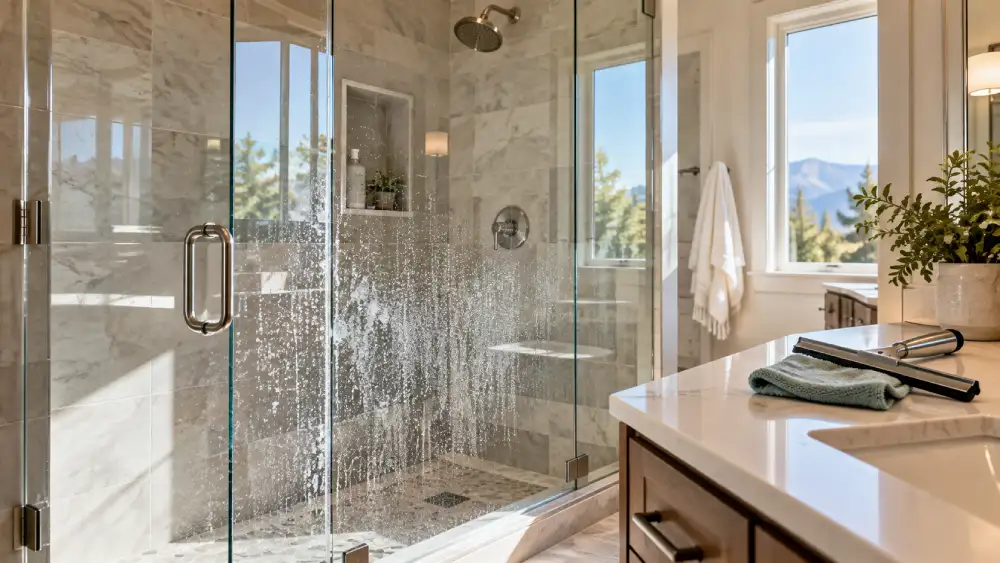
If you wiped your shower door yesterday and it already has a cloudy film, your cleaning routine probably isn’t the problem. The water is. Orem’s tap water carries a lot of dissolved calcium and magnesium, and every drop that dries on glass, chrome, or porcelain leaves a little of that mineral behind.
The fix is almost always the same: dissolve the mineral with a mild acid, give it time to work, scrub with something that won’t scratch, then rinse and dry. White vinegar handles fresh spots. Citric acid or a commercial descaler handles buildup that has been there for months. Natural stone is the big exception and needs a different approach.
Below we cover how hard Orem’s water really is (the city publishes the numbers), what works on each surface in a typical Orem home, and how to keep the stains from coming back between cleanings.
How Hard Is Orem’s Water?
Hard water is water with a high concentration of dissolved calcium and magnesium, usually measured in milligrams per liter (mg/L) or grains per gallon (gpg).
Orem’s water is hard, and at the top of its range it is very hard. The City of Orem’s 2026 Water Quality Report lists hardness in the city system from 120 to 428 mg/L, roughly 7 to 25 grains per gallon, across samples taken between 2018 and 2025. The U.S. Geological Survey classifies 121 to 180 mg/L as hard and anything above 180 mg/L as very hard.
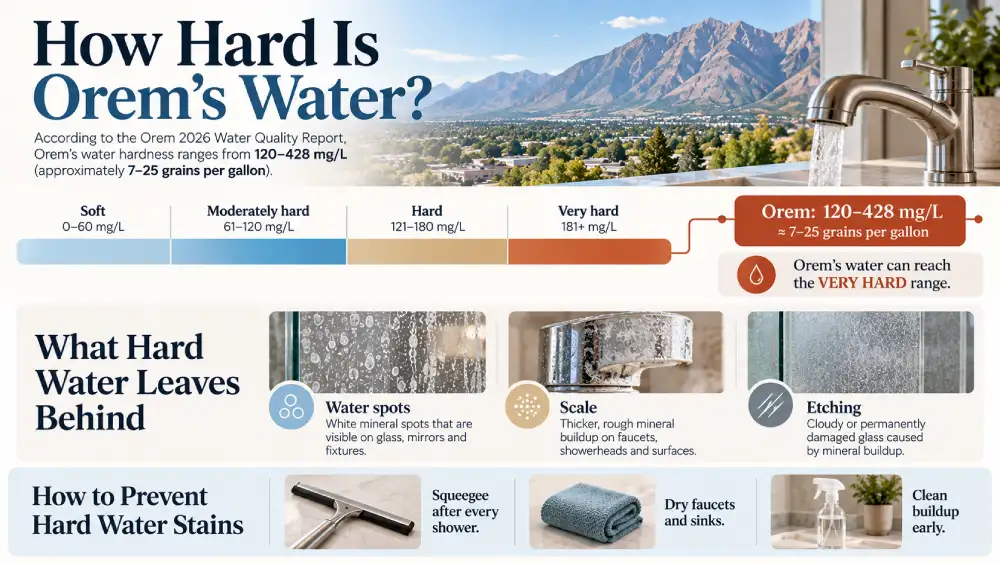
Why such a wide range? Orem blends several sources. According to the same report, about 60% of the city’s water comes from surface sources (the Provo River, Deer Creek Reservoir, and Jordanelle Reservoir), 25% from nine deep wells, and 15% from two mountain springs in Provo Canyon. Groundwater picks up more minerals moving through rock than river water does, so the mix reaching your faucet can shift, and so can how fast your shower glass clouds over.
There’s a local connection we like here. Part of the water in an Orem shower starts in Deer Creek and Jordanelle, the same Heber Valley reservoirs near where our team is based. Same water, same mineral habits. The methods in this guide are the ones we use every week on homes in Heber City and Park City, and they carry over directly.
Want your own number? Hardness test strips from a hardware store give a reading in about a minute, and the result tells you whether you’re dealing with occasional spots or constant scale.
What a Hard Water Stain Actually Is
When hard water evaporates, the water leaves and the minerals stay. What’s left is mostly calcium carbonate, a chalky white compound also called limescale. Three different problems get lumped together as “hard water stains,” and each one needs its own treatment.
- Water spots are fresh, thin mineral rings from droplets that dried. A mild acid removes them in minutes.
- Scale is layered buildup from weeks or months of spots drying on top of each other. It feels rough to the touch and needs longer contact time with the cleaner.
- Etching is damage to the surface itself, where minerals and moisture have pitted glass or dulled stone. No cleaner fixes it, which is why it gets its own section below.
A quick way to tell them apart: wet the area. If the haze disappears while wet and comes back exactly the same once dry, even after a good soak with vinegar, you’re likely looking at etching rather than a deposit.
What Removes Hard Water Stains? Choosing the Right Cleaner
Mineral deposits are alkaline, so acids dissolve them. Start with the gentlest option and only step up when it doesn’t work. Here are the choices, from mildest to strongest:
- Distilled white vinegar. Household vinegar is usually about 5% acetic acid. It’s the right first step for fresh spots on glass, chrome, and glazed porcelain. Warming it slightly speeds it up.
- Citric acid or lemon juice. Citric acid powder dissolved in warm water (about a tablespoon per cup) works faster than vinegar on older scale and doesn’t leave the smell behind.
- Commercial descalers. Products labeled for calcium, lime, and rust are the next step for thick buildup. Check the label for which surfaces they’re approved on, and ventilate the room.
- Baking soda, used on its own. It’s a mild abrasive for scrubbing after the acid has softened the deposit. Mixing it with vinegar in the same paste mostly neutralizes both, so use them one after the other instead.
What to avoid: steel wool and gritty powders on glass, stainless steel, and plated fixtures, since they scratch. And never mix vinegar or any acidic cleaner with bleach. The combination releases chlorine gas.
Keep a small kit together: a spray bottle, microfiber cloths, a non-scratch scrub pad, an old toothbrush, paper towels or plastic wrap for soaking, and a squeegee. That covers nearly every job below.
How to Remove Hard Water Stains, Surface by Surface
Most Orem homes have the same handful of trouble spots: the shower, the faucets, the toilet, the kitchen sink, and the counters. Here’s how we handle each one.
Glass Shower Doors
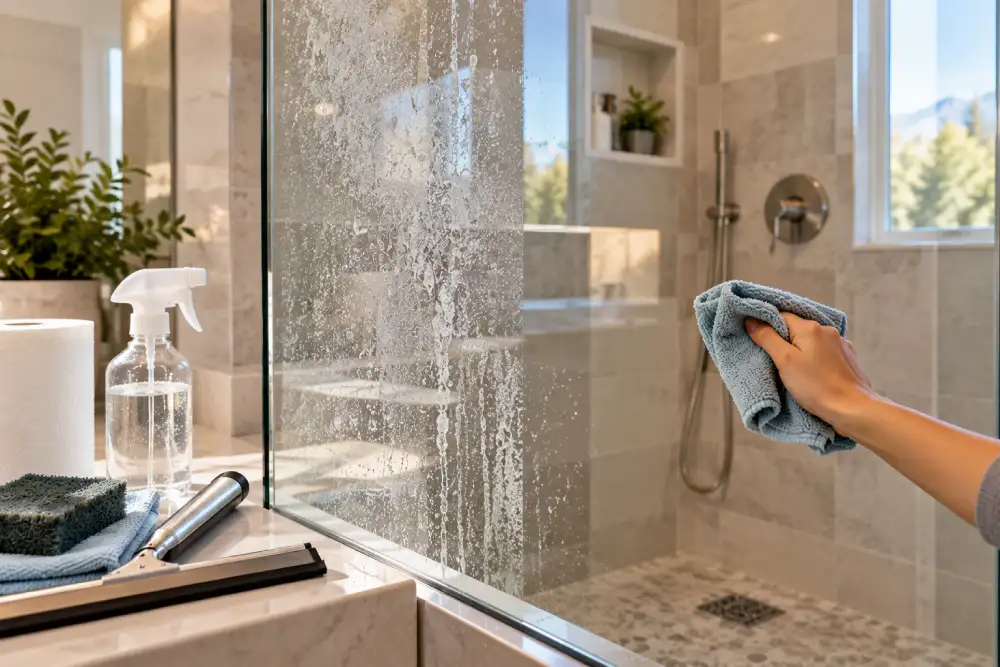
Shower glass shows hard water faster than anything else in the house because it gets soaked daily and dries slowly. Spray the glass with warm vinegar or a citric acid solution, then press paper towels or plastic wrap against it so the cleaner stays wet instead of running down. Leave it 15 to 30 minutes, scrub with a non-scratch pad in small circles, rinse with warm water, and squeegee dry.
For heavy buildup, repeat the soak or move to a descaler labeled safe for glass. Be careful with razor blades and polishing compounds: some shower glass ships with a factory protective coating, and scraping can strip it. Check the manufacturer’s care instructions before using a blade. Once the glass is clean, a water-repellent glass treatment makes the next cleaning noticeably easier.
Faucets, Showerheads, and Fixtures
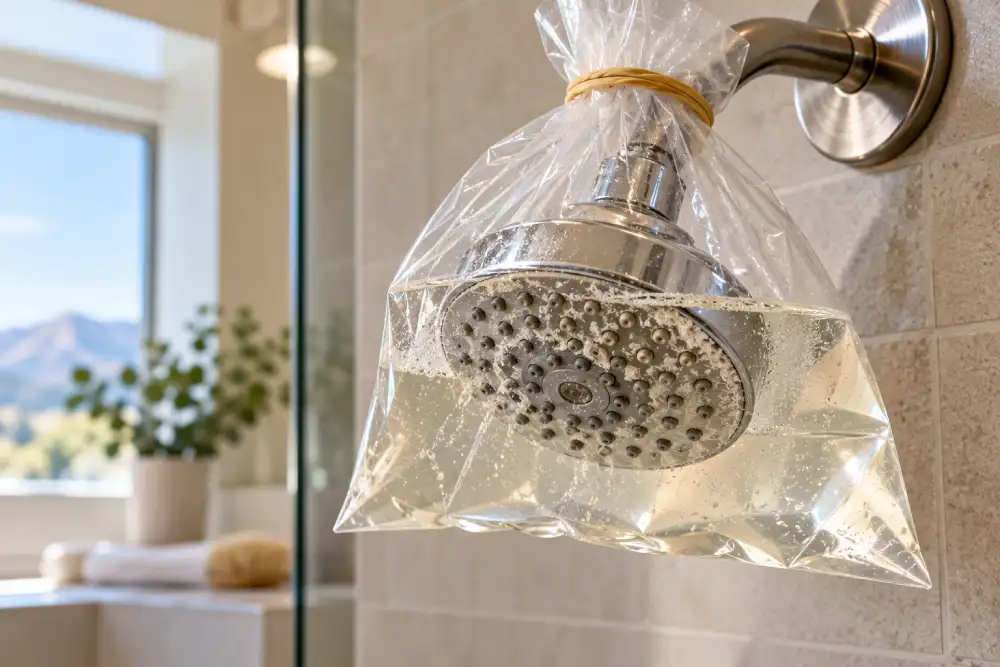 For a crusty showerhead, fill a plastic sandwich bag with vinegar, wrap it around the head so the nozzles sit in the liquid, and secure it with a rubber band. An hour is usually enough. Afterward, run hot water to flush loosened scale out of the nozzles and use a toothbrush on whatever is left.
Faucet aerators clog the same way. Unscrew the aerator, soak it in a cup of vinegar, brush it clean, and screw it back on. One caution from experience: brushed nickel, brass, gold-tone, and oil-rubbed bronze finishes can discolor with long acid soaks. On those, wipe the vinegar on, wait a few minutes, rinse, and dry instead of soaking.
Toilet Bowl Rings
That gray or orange ring at the waterline is mineral buildup left behind as the water slowly evaporates. Turn off the supply valve and flush to drop the water level, then apply citric acid, a toilet descaler, or undiluted vinegar directly to the ring. Let it sit for several hours or overnight, then scrub.
For a ring that won’t budge, a pumice stone kept fully wet will take it off glazed porcelain without scratching. Keep the stone wet the whole time; a dry pumice stone can mark the bowl. If the ring keeps coming back within a week, a quick swipe with the toilet brush every few days does more than a monthly scrub.
Stainless Steel Sinks and Appliances
Wipe stainless steel with vinegar on a microfiber cloth, always following the direction of the grain, then rinse and dry. For white spots around the drain or on the refrigerator water dispenser, a paste of baking soda and water applied with a soft cloth lifts them without scratching. Skip anything with chlorine on stainless, and dry the sink at the end of the day. Standing water is where most sink spots start.
Granite, Quartz, and Natural Stone
This is where people do the most damage trying to help. Marble, travertine, and limestone are calcium-based stones, so vinegar and lemon juice etch them, leaving dull patches that no cleaner will reverse. Granite holds up better, but repeated acid use wears down the sealer that protects it.
On natural stone, use a pH-neutral stone cleaner or a hard water remover that is specifically labeled stone-safe, and dry the surface after each cleaning. For quartz, mild dish soap and warm water handle daily spots; most quartz manufacturers advise against harsh chemicals, so check the care guide for your countertop. If stone is already etched, a stone restoration professional can usually polish it out.
Tile and Grout
Glazed ceramic and porcelain tile handle diluted vinegar well. Grout is a different story. It’s porous and cement-based, and frequent acid cleaning can wear it down over time. Use a diluted solution, keep the contact time short, rinse thoroughly, and reseal grout periodically so minerals have less to grab onto.
Can Hard Water Stains Be Permanent?
Yes. When mineral deposits sit on glass for a long time, especially in a hot, steamy shower, they can etch the surface. Etched glass looks cloudy even when perfectly clean, and the haze shows up evenly rather than in spots or drip patterns.
Light etching can sometimes be improved with a glass polishing compound such as cerium oxide, used carefully and according to the product directions. Deep etching usually means the glass needs replacing. We’d rather tell you that upfront than have you spend an afternoon scrubbing something that won’t come clean. The same is true for etched marble or travertine: that’s a job for a stone professional, not a stronger cleaner.
How to Prevent Hard Water Stains in an Orem Home
With water this hard, prevention beats removal every time. These habits make the biggest difference, and none of them take more than a minute or two:
- Squeegee the shower glass after every shower. About 30 seconds, and it removes most of the water before it can dry into spots.
- Dry faucets and the sink with a microfiber towel at the end of the day, especially in the kitchen.
- Do a weekly spray-and-wipe of glass and fixtures with diluted vinegar (except on natural stone) so spots never turn into scale.
- Fix drips quickly. A dripping faucet builds a mineral trail in days.
- Consider a water softener if you own your home. It removes hardness minerals before they reach your fixtures. If you rent, the squeegee and the weekly wipe-down are your best tools.
Consistent upkeep is also where a recurring cleaning schedule helps most. A regular visit keeps scale from building between your own touch-ups, and if you’re not sure what frequency fits your household, our guide on how often to schedule house cleaning breaks it down.
When It Makes Sense to Call a Cleaning Team
Fresh spots are a five-minute DIY job. Months of scale on every shower door, faucet, and fixture in the house is a different project, and it’s usually part of a full deep cleaning rather than a regular visit. If you’re unsure which one your home needs, our breakdown of deep cleaning vs. regular cleaning explains the difference.
Moving out of a rental is another common case. Orem has a large rental market, and hard water stains on glass and fixtures are among the things landlords notice at the final walkthrough. A detailed move-out cleaning covers fixtures, glass, and appliances along with the rest of the unit.
Xquisite Homes now provides house cleaning in Orem, using family- and pet-safe products and the same surface-by-surface approach described in this guide. If you’d like a hand getting your bathrooms and kitchen back to clear, request a free quote and we’ll put together a plan for your home.
Frequently Asked Questions
Is Orem’s water hard or soft?
Orem’s water is hard. The City of Orem’s 2026 Water Quality Report shows hardness between 120 and 428 mg/L (about 7 to 25 grains per gallon), and the USGS classifies anything above 180 mg/L as very hard. The exact level at your tap depends on the blend of river, well, and spring water reaching your area.
Does vinegar remove hard water stains?
Yes, for fresh spots and light buildup on glass, chrome, porcelain, and glazed tile. Its acetic acid dissolves calcium deposits, especially when you keep it wet on the surface for 15 to 30 minutes. For thick scale, citric acid or a labeled descaler works faster, and vinegar should never be used on marble, travertine, or limestone.
Can hard water stains be permanent on glass?
They can. When minerals sit on glass long enough, they etch the surface, and etching can’t be cleaned away. Light etching sometimes improves with a glass polishing compound, while deep etching usually means replacing the glass. Squeegeeing after each shower is the best way to prevent it.
What removes hard water stains from a toilet?
Citric acid, a toilet descaler, or undiluted vinegar left on the ring for several hours will soften most toilet stains. Lower the water level first so the cleaner touches the ring directly. For stubborn rings, a pumice stone kept fully wet removes the deposit from glazed porcelain without scratching it.
How do I prevent hard water stains on shower glass?
Squeegee the glass after every shower and give it a weekly spray-and-wipe with diluted vinegar. Most stains form when water dries slowly on the glass, so removing the water is more effective than any cleaner. A water-repellent glass treatment and good bathroom ventilation help too.
Is a water softener worth it in Orem?
For many homeowners it is, given that Orem’s water tests well into the very hard range at times. A softener reduces scale on fixtures, glass, and appliances at the source. It’s a household decision that depends on your budget and plumbing, and renters usually get most of the benefit from a daily squeegee and a weekly wipe-down instead.
Hard water isn’t going anywhere in Utah Valley, but it doesn’t have to own your bathroom. Start gentle, keep surfaces dry, and match the cleaner to the surface. For more ways to keep your home in shape between visits, see our practical cleaning tips.